WordPress Design Questionnaire: 25 Essential Questions for Effective Client Intake and Project Planning
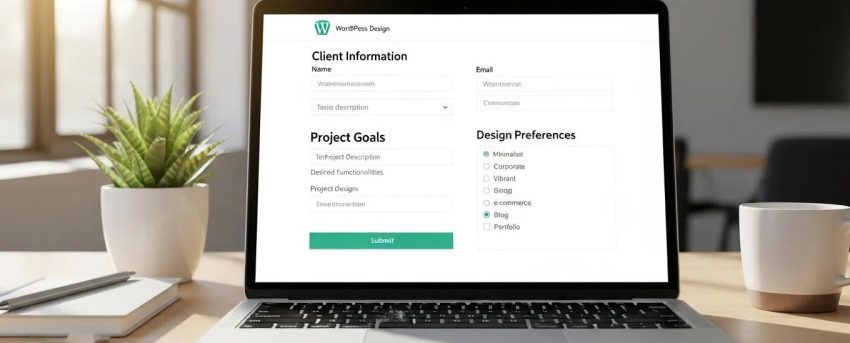
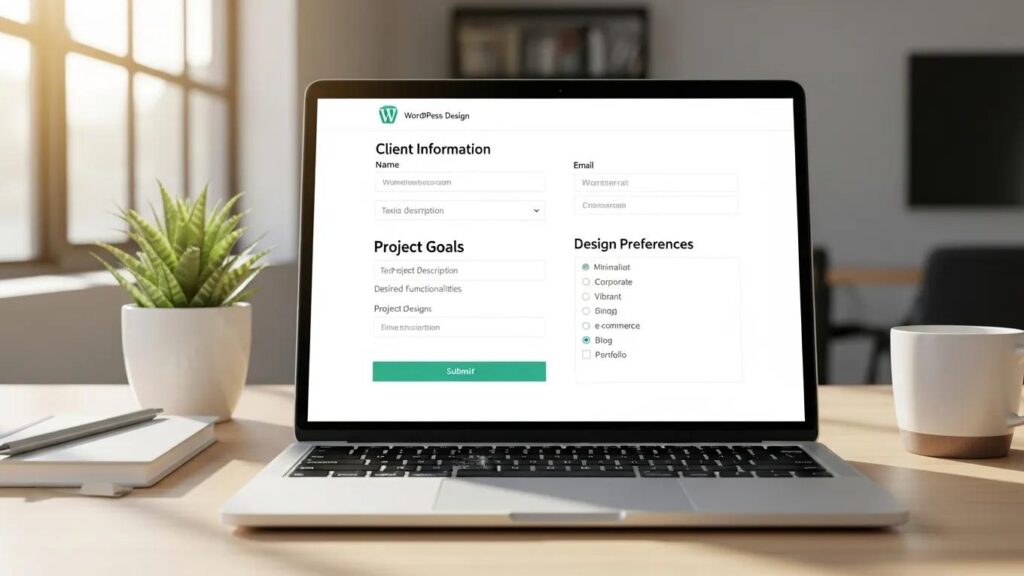
[Image: WordPress design questionnaire form template]
By David G., WP Support Lab
Creating a successful WordPress website begins with understanding the client’s needs and goals. A well-structured design questionnaire is essential for gathering the necessary information to guide the project effectively. This article outlines 25 essential questions that can help designers and developers capture critical insights during the client intake process. By addressing these questions, it is possible to ensure that the final product aligns with the client’s vision and meets their expectations. The following sections explore key client goals, technical requirements, design preferences, SEO considerations, and project management strategies. Each section provides valuable insights into how to formulate questions that lead to a successful WordPress project.
What Are the Key Client Goals and Needs to Identify in a WordPress Design Questionnaire?
Identifying client goals and needs is crucial for effective project planning. A well-crafted questionnaire helps clarify the client’s vision and sets the foundation for the entire project. Understanding these elements allows designers to create a website that not only meets functional requirements but also resonates with the target audience.
Which Website Objectives Should Clients Specify for Clear Project Direction?
Clients should define specific website objectives to provide clear project direction. This includes outlining measurable metrics for success, such as increasing website traffic, generating leads, or enhancing user engagement. Additionally, establishing a timeline for achieving these goals can help keep the project on track and ensure accountability.
Indeed, the challenge of clearly defining client requirements and objectives early in a project is a well-recognized hurdle in web development.
Defining Client Requirements in Web Projects
There is often considerable uncertainty on the part of the client as to their own requirements. The importance of defining the objectives of the system during the early stages of a project are generally acknowledged to be important, but access to the tools and templates can encourage developers to build too early. Often requirements are inadequately documented, or only emerge during development, or change as development proceeds.
Client needs and the design process in web projects, DB Lowe, 2002
How to Capture Target Audience and Brand Identity in Client Intake Forms?
[Image: Client discovery meeting with design brief]

To effectively capture a client’s target audience and brand identity, the questionnaire should include questions that encourage detailed responses. Using branded, user-friendly forms can enhance the client experience and yield more insightful answers. Highlighting areas where the client can add value, such as unique selling propositions or brand stories, can further enrich the information gathered.
What Technical Requirements Must Be Included in WordPress Project Planning Questions?
Technical requirements are a vital aspect of WordPress project planning. These questions help identify essential features and functionalities that the website must have to operate effectively and meet user expectations.
How to Assess Hosting, Security, and Performance Needs Effectively?
Assessing hosting, security, and performance needs involves asking clients about their current infrastructure and any specific requirements they may have. Questions should cover topics such as preferred hosting environments, security protocols, and performance benchmarks to ensure the website operates smoothly and securely.
Which Integrations and Functionalities Should Clients Specify?
Clients should specify any necessary integrations and functionalities that are critical to their business operations. This may include e-commerce capabilities, CRM systems, or third-party applications. Understanding these needs early in the project can help avoid costly changes later on.
How to Gather Design Preferences and Style Guidelines in WordPress Design Client Questions?
Gathering design preferences and style guidelines is essential for creating a visually appealing website that aligns with the client’s brand. The questionnaire should include questions that help define the overall aesthetic and user experience.
What Questions Help Define Color Schemes, Layouts, and Visual Elements?
To define color schemes, layouts, and visual elements, the questionnaire should ask clients about their preferences and inspirations. Questions could include inquiries about existing branding, preferred color palettes, and examples of websites they admire. This information will guide the design process and ensure the final product reflects the client’s vision.
How to Incorporate Client Branding and User Experience Expectations?
Incorporating client branding and user experience expectations requires asking targeted questions about their brand guidelines and desired emotional responses from users. Understanding how clients want their audience to feel when interacting with the website can significantly influence design choices and functionality.
Why Are SEO Considerations Critical in a WordPress Website Questionnaire?
SEO considerations are critical in a WordPress website questionnaire because they directly impact the site’s visibility and user experience. By addressing SEO needs early in the project, designers can create a website that is not only visually appealing but also optimized for search engines. For comprehensive SEO strategies, consider exploring resources that offer in-depth guidance.
Which SEO-Related Questions Ensure Optimized Website Structure and Content?
To ensure optimized website structure and content, the questionnaire should include SEO-related questions that help identify target keywords and existing content. Clients should be encouraged to share their SEO goals, such as improving search rankings or increasing organic traffic, to inform the design and development process.
How to Link SEO Needs to WordPress Development Requirements?
Linking SEO needs to WordPress development requirements involves discussing the importance of early SEO integration. Clients should be asked about their preferred SEO strategies and any specific requirements they have for on-page optimization, such as meta tags, alt text, and URL structures.
How to Manage Project Scope, Timelines, and Communication Through Discovery Questions?
[Image: WordPress project scope planning checklist]

Managing project scope, timelines, and communication is essential for a successful project outcome. Discovery questions can help clarify expectations and establish a framework for collaboration.
What Are Effective Questions for Defining Budget and Deadlines?
Effective questions for defining budget and deadlines should focus on the client’s financial constraints and desired project timelines. Clients should be encouraged to discuss their estimated budget and ideal launch date, which will help set realistic expectations and guide the project planning process.
| Question Type | Purpose | Example |
|---|---|---|
| Client Goals | Define objectives | “What are your primary goals for this website?” |
| Technical Needs | Identify requirements | “What specific functionalities do you need?” |
| Design Preferences | Capture style | “Can you provide examples of websites you like?” |
This table summarizes the types of questions that can be included in a WordPress design questionnaire to ensure comprehensive client intake and project planning. By addressing these areas, designers can create a more effective and tailored website that meets the client’s needs and expectations. For those seeking assistance, WordPress support services can provide valuable guidance.
Furthermore, for those considering building a website with AI, AI website builder tools offer innovative solutions to streamline the process.
Additionally, a thorough WordPress audit can help identify areas for improvement and ensure optimal performance.
When it comes to bringing a vision to life, leveraging professional WordPress development services ensures a seamless and effective implementation.
For more information and resources, visit WPSupportLab, the go-to destination for all things WordPress.
Technical Infrastructure Questions Every Client Must Answer
Before initiating any WordPress design engagement, WP Support Lab emphasizes a thorough technical discovery phase. This phase includes detailed questions about the client’s hosting environment, expected traffic, security protocols, and infrastructure needs to ensure the website’s stability, scalability, and security.
Hosting Environment: Shared, Managed WordPress, or VPS?
Clients are asked to specify their preferred hosting environment. Options typically include shared hosting, managed WordPress hosting, or Virtual Private Server (VPS) solutions. Each environment offers different levels of performance, control, and scalability. Understanding this preference early helps tailor the website’s architecture and deployment strategy.
Expected Concurrent Users and Traffic Peaks
Accurately estimating the number of concurrent users and anticipated traffic spikes is critical for performance planning. Clients are prompted to provide data or projections regarding peak traffic periods, which informs decisions about server resources, caching strategies, and load balancing.
SSL/TLS Requirements and CDN Needs
Security is paramount. The questionnaire includes questions about SSL/TLS certificate requirements to ensure encrypted data transmission. Additionally, clients are asked if they require a Content Delivery Network (CDN) to improve global content delivery speed and reliability.
Database Size Estimates and Backup/Recovery Expectations
Clients must provide estimates of their current or expected database size, which impacts hosting and optimization strategies. Furthermore, backup and disaster recovery expectations are discussed, including frequency, retention policies, and restoration procedures, to safeguard data integrity.
By addressing these technical infrastructure questions, WP Support Lab ensures that the foundational environment supports the website’s functional and performance goals from day one.
Content Strategy and SEO Questions
Content strategy and SEO are integral to a website’s success. WP Support Lab’s questionnaire delves into these areas to align content migration, structure, and optimization with the client’s business objectives.
Existing Content Migration and URL Structure Preservation
Clients are asked about existing content that needs to be migrated, including the volume and format. Preserving URL structures is emphasized to maintain SEO equity and avoid ranking losses. The questionnaire probes whether redirects or canonical tags are necessary to manage legacy URLs.
Sitemap and Schema Markup Requirements
To facilitate search engine indexing, clients specify sitemap needs, including XML sitemap generation and submission preferences. Schema markup requirements are also discussed to enhance search result appearance and improve semantic understanding by search engines.
Blog/News Functionality and Multilingual Requirements
Questions address whether the website will include a blog or news section, which impacts content management workflows and SEO strategies. Additionally, multilingual site requirements are explored to ensure proper language handling, translation workflows, and SEO considerations for international audiences.
Integration with Google Analytics 4 and Google Search Console
Clients are queried about their use of analytics and webmaster tools. Integration with Google Analytics 4 and Google Search Console is critical for ongoing performance monitoring and SEO optimization. The questionnaire ensures tracking codes and verification methods are planned from the outset.
These content strategy and SEO questions enable WP Support Lab to build websites that are not only visually compelling but also optimized for discoverability and user engagement.
Post-Launch Support and Maintenance Questions
Effective post-launch support is essential for maintaining website health and performance. WP Support Lab’s questionnaire includes detailed inquiries to tailor maintenance plans that align with client expectations and operational needs.
Ongoing Maintenance Plans and Update Management Preferences
Clients specify their preferences for ongoing maintenance, including frequency of WordPress core, theme, and plugin updates. The questionnaire explores whether clients prefer automated updates, manual review before updates, or a hybrid approach to balance security and stability.
Uptime Monitoring and Security Scanning Frequency
To ensure continuous availability, clients are asked about uptime monitoring requirements, including alert thresholds and reporting preferences. Security scanning frequency is also addressed to detect vulnerabilities proactively and maintain compliance with best practices.
Performance Benchmarking Cadence
Performance monitoring is critical for user experience. The questionnaire includes questions about how often clients want performance benchmarks conducted, such as page load times and server response metrics, to identify and address bottlenecks promptly.
WP Support Lab’s Post-Launch Support Agreements
Based on questionnaire responses, WP Support Lab structures customized post-launch support agreements. These agreements ensure clients receive the appropriate level of technical oversight, security management, and performance optimization to sustain website success over time.
WP Support Lab Discovery and Design Services
At WP Support Lab, every WordPress design project begins with a comprehensive discovery questionnaire that serves as the foundation for success. This detailed intake process ensures that technical requirements, business goals, and content strategy are fully aligned before a single line of code is written. By leveraging this structured approach, WP Support Lab delivers tailored solutions that meet client expectations, optimize performance, and facilitate seamless project execution. The questionnaire’s depth and precision reflect WP Support Lab’s commitment to excellence and client satisfaction in every engagement.